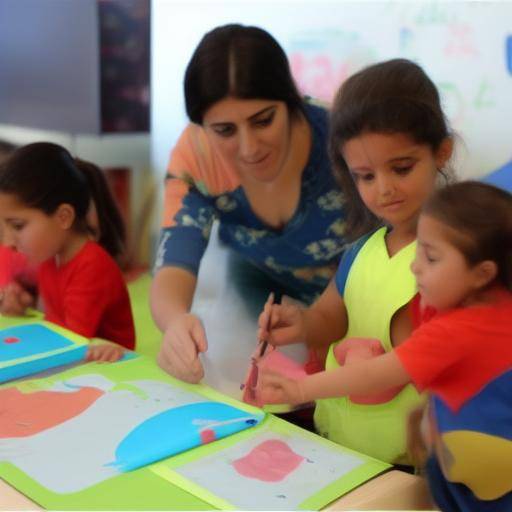
The importance of school projects in social development is undeniable. When students participate in projects that go beyond the classroom, they not only acquire academic knowledge, but also develop social, emotional and citizenship skills. In this article, we will thoroughly explore the impact of school projects on social development, their history, benefits, challenges, best practices and the crucial role they play in promoting more inclusive and fair societies.
History and Background
The connection between school projects and social development dates back to various educational trends throughout history. From the 19th-century progressive schools to the expansion of inclusive education in the 20th century, there has been a growing focus on the importance of comprehensive education that prepares students to be active and participatory members of society. Even today, this relationship continues to be a ground for innovative study and application in educational systems around the world.
Within this framework, it is vital to understand how school projects have evolved to address not only academic aspects, but also the social and emotional needs of students. The integration of moral, civic and citizenship education through school projects has been a catalyst for the formation of individuals aware of their environment, able to collaborate and contribute to the well-being of their community.
Deep analysis
The integration of school projects into social development brings with it a plethora of tangible and intangible benefits. Studies have shown that students involved in school projects have greater competition in soft skills, such as teamwork, problem solving, effective communication and empathy. These skills are fundamental to success in the working environment and to contribute in a renewed way to society.
However, despite their undeniable benefits, school projects also face significant challenges. The availability of resources, teacher training, project evaluation and ensuring equal participation of all students are areas that require attention and action.
Comprehensive review
In practice, several effective strategies have been identified to promote social development through school projects. The active participation of the community, collaboration with non-profit organizations and the integration of interdisciplinary projects have been shown as powerful ways of enhancing the impact of these projects on society.
The vision of the future in this area is promising. As awareness of the importance of social development grows, new methodologies and approaches are developed to strengthen the role of school projects in this area. The adoption of innovative technologies, the internationalization of projects and the promotion of equity and inclusion will continue to be key pillars for promoting fair and sustainable societies.
Comparative analysis
The integration of school projects with the aim of enhancing social development has close links with the promotion of inclusive education and citizenship. Projects that seek to foster a culture of respect, equality and diversity contribute substantially to creating more cohesive and equitable societies.
The concept of promotion in this context involves the generation of opportunities and the promotion of actions that favor the integral development of individuals and communities. School projects thus become powerful tools to promote processes of empowerment and social transformation.
Practical Tips and Accessible Recommendations
If you are interested in incorporating school projects focused on social development, here are some practical tips to maximize their impact:
- It establishes links with community organizations to enrich projects.
- It promotes the equal participation of all students, providing specific support when necessary.
- It integrates interdisciplinary projects that address real and relevant problems for the community.
- It evaluates projects in a comprehensive manner, considering not only academic results, but also the impact on the social development of students.
Industry Perspectives and Expert Reviews
The educational community and social development experts agree that school projects play a crucial role in the comprehensive training of students. The effective implementation of these projects requires a collective commitment to overcome challenges and take full advantage of their benefits.
Experts also emphasize the importance of continuing to explore new ways of integrating school projects to effectively address contemporary social challenges, such as sustainability, social justice and inclusion. Collaboration between different social actors and the exchange of experiences and good practices are essential to effectively promote this agenda.
Case Studies and Real Life Applications
To better understand the impact of school projects on social development, it is useful to examine specific cases of successful implementation. In various educational and geographical contexts, innovative school projects have been deployed that have had a significant impact on the lives of students and their communities. These cases provide valuable lessons that can guide the implementation of similar projects elsewhere.
Future Trends and Predictions
The future of school projects focused on social development promises to be dynamic and promising. The integration of emerging technologies, the expansion of online education and the emphasis on experiential learning are expected to boost new forms of collaboration and participation in interdisciplinary projects.
In line with current trends, school projects are expected to evolve to address complex social challenges, such as climate change, poverty and gender equality. This evolution will require a constant commitment to equity, diversity and inclusion, as well as the promotion of cohesive and sustainable societies.
Conclusion
In short, school projects are powerful tools to promote social development in the educational field. Its impact goes beyond academic qualifications, strengthening socio-emotional skills and raising an active awareness of the challenges and opportunities facing society. In addressing these aspects in a comprehensive manner, school projects have the potential to positively transform the reality of communities and their members.
We hope that this article has provided a deeper understanding of the importance of school projects in social development and inspired concrete actions for their effective implementation.
For more information, we invite you to continue exploring this fascinating issue and to discover new ways of contributing to social development through education.
Frequently asked questions
How can I select an appropriate school project to promote social development?
The selection of a school project that fosters social development must be in line with the needs and realities of the educational community. It is important to involve students, teachers and community members in identifying relevant issues and social challenges that can be addressed through the school project. Considering the diversity of experiences and perspectives in the choice of the project is essential to ensuring its relevance and effectiveness.
What are the key considerations in assessing the social impact of a school project?
In assessing the social impact of a school project, it is essential to go beyond academic results and consider aspects such as the development of socio-emotional skills, the strengthening of the community and the generation of awareness of social problems. The active participation of students, community feedback and the collection of qualitative and quantitative data are key practices in this comprehensive assessment process.
How can school projects promote inclusion and equity?
The promotion of inclusion and equity in school projects can be achieved through strategies that ensure the equal participation of all students, awareness of cultural and social diversity, and collaboration with community organizations that advocate equal opportunities. In addition, it is crucial to establish learning environments that celebrate diversity and promote mutual respect, thus promoting an inclusive environment for all participants.
What is the role of the community in the success of school projects focused on social development?
The active participation of the community is crucial to the success of school projects focused on social development. Collaboration with local organizations, community leaders and civil society members in the planning, implementation and evaluation of projects enriches their impact and sustainability. In addition, the involvement of the community provides opportunities for the practical application of the knowledge acquired in the classroom, thereby strengthening the connection between education and daily life.
How can school projects address contemporary social challenges?
School projects can address contemporary social challenges by involving students in identifying, analysing and seeking solutions for problems such as environmental sustainability, social inclusion, quality education and gender justice. By integrating interdisciplinary approaches and promoting critical reflection, school projects provide an enabling space for civic engagement and awareness-raising on relevant and urgent issues in society.
What is the long-term impact of school projects on the social development of students?
The long-term impact of school projects on the social development of students can be seen in their ability to address complex challenges, their willingness to collaborate effectively, their awareness of civic and social responsibility, and their ability to generate innovative solutions to social problems. These skills and values strengthened through school projects will be reflected in the active contribution of students to building more equitable, fair and sustainable societies throughout their adult lives.
What is the role of the teacher in the successful implementation of school projects for the promotion of social development?
The teacher plays a crucial role in the successful implementation of school projects for the promotion of social development. Beyond imparting knowledge, the teacher acts as a guide, facilitator and motivator for students, fostering their active participation, critical thinking and empathy. The teacher is also responsible for effectively integrating social development elements into the curriculum, adapting them to the unique needs and characteristics of their students and their environment.
Conclusions
In conclusion, school projects focused on social development represent an invaluable opportunity to enrich education, enhance the personal and collective growth of students, and contribute positively to the well-being of society as a whole. The integration of school projects focused on social development not only strengthens academic skills, but also cultivates values, attitudes and competencies fundamental to the promotion of more inclusive, equitable and supportive communities.
As we continue to explore and promote the applicability of school projects in diverse educational environments, it is essential to recognize their transformative capacity and advocate for their systematic integration into educational programmes at the global level.
We hope that this article has provided an exhaustive and enriching view on the importance and potential of school projects to promote social development. Its effective implementation is associated with a collective commitment to comprehensive education and the construction of more just and sustainable societies.
Thank you for accompanying us in this exploration of learning and social development through school projects!