Some children have a bad day in the playground and, the next morning, walk back into class looking for someone to play with. Others shut down, avoid the group and carry that discomfort around for weeks. The difference usually isn't that fewer things happen to some of them, but the support they have around them and what they've learned to do with it. That is what we mean by social resilience: the ability to bounce back from setbacks by leaning on others, and to stay part of the group when things get complicated.
The good news is that it isn't a fixed trait. It's built in the classroom, in the lunch hall, at the school gate and at home, too. Whether you're a teacher or a mum, dad or carer, you have room to help. Here you'll find concrete ideas for everyday life, meant to be tried without big changes or special resources.
What social resilience looks like in everyday school life
When people talk about resilience, they often picture individual toughness, almost the ability to put up with things without complaining. Social resilience takes a different path. It focuses on relationships: having someone to turn to, knowing how to ask for help, feeling that you belong to a group and being able to repair a friendship after a conflict.
At school, this shows up in very ordinary situations:
- A girl who isn't picked for a team and, instead of leaving the game, asks if she can join the next round.
- A boy who argues with his best friend and, a couple of days later, finds a way to make up.
- A group that loses its project because a file got deleted and, once the disappointment fades, splits up the work to redo it.
None of these scenes is heroic. They're small signs that a child can have a hard time and still stay connected to others. That connection is what protects them. A pupil who feels part of the group tends to cope better with failure, change and criticism, because they know they're not alone.
Building a group climate where mistakes aren't scary
If every mistake in a class gets pointed out, compared or laughed at, children learn to hide. And a child who hides doesn't ask for help. That's why the first step is to look after the atmosphere.
If you're a teacher, you can try a few simple habits:
- Normalise mistakes out loud. When you get something wrong on the board, say so calmly and correct it. Your pupils see that getting things wrong isn't a disaster.
- Separate the behaviour from the person. "That answer isn't right" lands very differently from "you always get it wrong".
- Keep an eye on the laughter. There's no need to ban humour, but make it clear that in this class nobody laughs at anybody.
- Recognise effort and helpfulness, not just results. A comment like "I saw you explaining the exercise to your classmate" reinforces exactly what you want to grow.
At home, the logic is the same. If your child comes home with a failed test, your first reaction matters a lot. Before talking about marks, you can ask how they feel and what they think happened. It's not about downplaying it, but about letting them know they can talk to you when things go wrong.
Teaching children to ask for and offer help
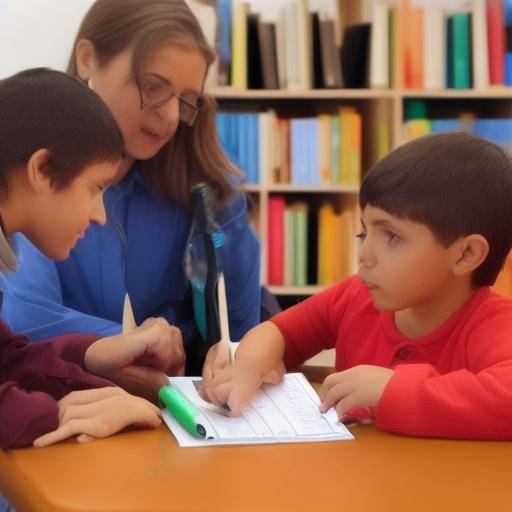
Asking for help sounds easy, but many children find it hard. Some feel embarrassed, others think they're being a nuisance and others don't even know where to start. Yet it's one of the skills that holds a person up most when they're going through a difficult time.
You can work on it in very practical ways:
- Give them the words. Practise specific phrases such as "Could you explain this again?" or "I don't get this part, can you give me a hand?". Having the sentence ready makes it easier to speak up.
- Make it clear who they can turn to. In class, it helps if every pupil knows which classmate or adult to go to when they're stuck. At home, talk about who makes up their network: grandparents, aunts and uncles, their sports coach, a trusted neighbour.
- Swap roles. Let the child who usually asks for help also get the chance to offer it. Helping someone else reinforces the idea that they have something valuable to contribute.
An everyday example: if your daughter gets overwhelmed by her maths homework, instead of solving it for her, you can suggest she writes down the question she'd ask her teacher the next day. That way she practises asking for help in a concrete way and doesn't come away feeling the problem has no solution.
Cooperative work that builds adaptability
Adaptability is the ability to adjust when the plan changes. In school life, plans change all the time: a classmate is absent, an activity is cancelled, the new teacher works differently. Children who have practised adapting alongside others tend to experience these changes with less anxiety.
Well-designed teamwork is a good training ground. Some ideas that often work:
- Rotating roles. If in each group one person coordinates, another takes notes, another fetches materials and another keeps an eye on the time, and those roles change from one task to the next, everyone practises different situations.
- Small, planned surprises. Every now and then, changing a condition halfway through a task ("you now have less time" or "one of the materials is missing") forces the group to reorganise. Afterwards, it's worth talking about how they handled it.
- A review at the end. Taking a moment to ask what worked, what was hard and what they'd do differently helps turn the experience into learning.
There are opportunities at home, too. When a day trip is called off because of rain, instead of giving up, you can come up with a plan B together. If you let your child suggest ideas, they learn that a change isn't just a loss: it can also open up other options.
Overcoming adversity as a shared learning experience
Nobody wants their children or pupils to suffer. But difficulties come anyway: a change of school, a house move, a family separation, losing a friend or a stretch of poor marks. Overcoming adversity isn't about avoiding these experiences, but about getting through them with someone by your side.
Some keys to talking about hard things without dramatising them or brushing them aside:
- Listen before giving advice. Often a child isn't looking for an immediate solution, but to feel understood. Saying "that must have been really tough" opens more doors than a list of tips.
- Share experiences close to home. You can tell them about a time when you had a hard time and what helped you. It doesn't need to be a big story; it just needs to be honest.
- Highlight the support, not just personal effort. When something has been overcome, it helps to name who was there: the friend who sat next to them, the teacher who gave them extra time, the brother who took their mind off it. That way the child learns that asking for support is part of getting through.
- Respect their timing. Every child processes things at their own pace. Some talk straight away, others need days.
In the classroom, circle time or class meetings can be a good space to share worries safely, as long as you respect who wants to speak and who would rather listen. If at any point you notice signs that concern you, such as a sudden change in behaviour or sadness that drags on, the sensible thing is to talk it through with the school's support staff or a professional.
Family and school are better together
Children don't live in separate compartments. What happens at home comes into class, and what happens in class comes back home. When families and teachers see each other as allies, the child gets a consistent message: the adults around them talk to each other and look out for them.
Some ways to strengthen that partnership:
- Communicate the good things too. If you're a teacher, a short note to the family when a child has done something kind for a classmate goes a long way. If you're a parent, telling the class teacher about something that's worrying your child can help them understand their behaviour.
- A shared language. If the class talks about "asking for help" or "making up" after a fight, using those same words at home gives continuity.
- Shared spaces. Open days, workshops with families or neighbourhood activities help the child see their support network working together.
You don't need to agree on everything. It's enough to share the goal of helping the child feel supported and able to connect with others even when things go wrong.
Frequently asked questions
At what age can you start working on social resilience?
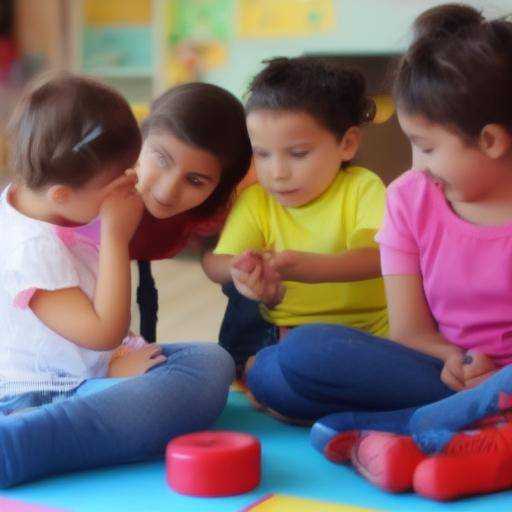
From a very young age. In the early years it's usually done through play, taking turns or comforting a classmate. As children grow, conversations and tasks can become more elaborate, but the foundation is the same: feeling part of a group and knowing there's someone to turn to.
What should I do if my child doesn't want to talk about what's happening at school?
It's quite common. Relaxed moments, like a walk or the drive home, often work better than a face-to-face conversation. Ask specific questions ("Who did you play with today?") rather than "How was your day?", and respect their silences. If the situation goes on or worries you, talk to their class teacher.
Does social resilience mean the child has to put up with everything?
No. Being resilient doesn't mean tolerating mistreatment or keeping quiet about something unfair. In fact, an important part of it is recognising when something isn't right and asking an adult for help. If there's bullying, it's the adults' responsibility to act, not the child's.
How can a teacher encourage adaptability without adding to an already full timetable?
In many cases, small tweaks to what you already do are enough: rotating roles in groups, spending a few minutes reviewing how a task went or talking calmly about changes of plan. There's no need for a new subject, just making the most of everyday situations.
Is it worth working on it at home if the school doesn't?
Yes, although ideally there's consistency between both places. What your child learns at home about asking for help, repairing conflicts and adapting to change usually goes with them wherever they are. If you can also share it with the school, even better.
Small gestures that add up
Social resilience isn't taught with a speech or in a single afternoon. It takes shape through lots of small moments: a mistake that isn't punished, a question someone dares to ask, a group that reorganises when something goes wrong, an adult who listens without rushing.
You don't need to do everything at once or do it perfectly. Choose one or two ideas that fit your classroom or your home and try them for a few weeks. Notice what changes, adjust what doesn't work and try again. What tends to stay with children isn't the talks about overcoming difficulties, but the feeling of having had someone by their side when they went through them.