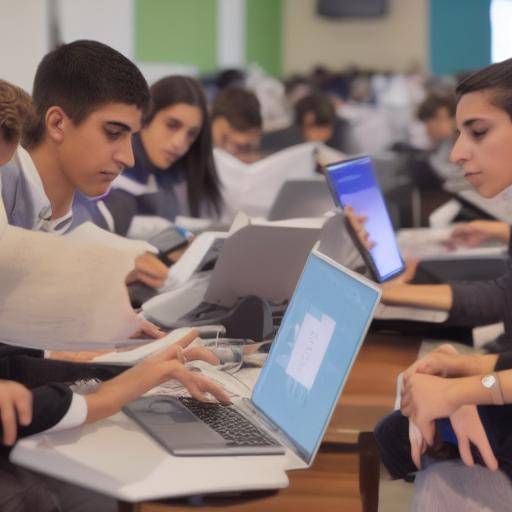
Adaptability is an essential skill in the changing world in which we live. In the case of students, this aptitude becomes even more important, as it allows them to face academic and personal challenges with resilience and effectiveness. In this article, we will explore how to develop adaptability in students, from their historical foundation to practical advice to promote this important skill.
Introduction
Adaptability, understood as the ability to adjust to different circumstances and environments, is a crucial feature for success in education and beyond. In the era of globalization, technology and the rapid evolution of the working world, students who possess this quality have a significant advantage in the search for opportunities and the development of their professional career. In this article, we will explore the various aspects of adaptability in the context of students, providing valuable information, practical advice and specialized perspectives on how to promote their development.
History and Background
The notion of adaptability has deep roots in psychology and philosophy. From personality theories to research on stress and resilience, various disciplines have addressed the importance of this ability to human well-being. In the field of education, adaptability has gained relevance as it recognizes its crucial role in preparing students for an uncertain and dynamic future.
The evolution of adaptability in the educational context has been marked by a change of focus, moving from a rigid and standardized model to a more flexible and focused on the integral development of students. This paradigm shift has led to the integration of adaptability in the curricula and the creation of specific programs for their promotion.
In researching the background of adaptability in students, we find that different pedagogical currents have addressed this issue from diverse approaches, highlighting the importance of teaching socio-emotional skills and promoting educational environments that encourage flexibility and problem solving.
Deep analysis
In tackling adaptability in the educational context, it is essential to understand the benefits of this ability to students. Beyond mere adjustment capacity, adaptability allows them to face the challenges with greater confidence, unfold in diverse environments and maintain an open mindset in the face of continuous learning.
However, the development of adaptability is not without challenges. Students can face obstacles related to resistance to change, fear of failure or lack of tools to face new situations. It is essential to address these challenges through specific strategies that promote self-efficiency, stress management and informed decision-making.
Currently, the educational trend is aimed at integrating adaptability into the school curriculum, as well as the implementation of extracurricular programs that encourage the development of this skill. Approaches based on experiential learning, problem solving and teamwork have been proven effective in cultivating adaptability in students.
Comprehensive review
Adaptability not only influences academic performance, but also impacts the preparation of students for their integration into the world of work. Employers increasingly appreciate the ability to adapt to changes, creativity in problem solving and the ability to work in diverse environments.
In this sense, best practices to develop adaptability in students range from the implementation of multidisciplinary projects to the incorporation of mindfulness techniques and emotional management in the classroom. In addition, mentoring, coaching and access to psychological support resources are complementary strategies that strengthen the comprehensive training of students.
Comparative analysis reveals that the development of adaptability is closely related to other fundamental aspects of education, such as autonomy, empathy and creativity. While each of these skills has its particularities, its integration and complementarity enhance the integral development of students, preparing them to meet the present and future challenges.
Practical Tips and Accessible Recommendations
Developing adaptability in students requires addressing both the individual and the collective dimension of this ability. At the individual level, it is essential to foster self-consciousness, emotional self-regulation and adaptability to new circumstances. In addition, the promotion of curiosity, tolerance for ambiguity and the mentality of growth strengthen the basis for the development of adaptability.
At the collective level, the dynamics of teamwork, the diversity of perspectives and the collaborative resolution of problems are fundamental to cultivate adaptability in students. The creation of inclusive environments, the promotion of effective communication and the recognition of diversity as an enriching asset enhance the ability of students to adapt.
Industry Perspectives and Expert Reviews
In the field of education and work, experts agree on the importance of developing adaptability as a transversal competition. From the job standpoint, soft skills, including adaptability, are positioned as determining factors in the employability and professional performance of individuals.
Education specialists highlight the need to integrate adaptability into training programs, as well as to link academic learning with practical experiences that challenge students to face complex and new situations. They also advocate the development of pedagogical strategies focused on stimulating creativity, resilience and the ability to manage uncertainty.
Case Studies and Practical Applications
Case studies offer a concrete look on the implementation of strategies for the development of adaptability in educational environments. Examples of extracurricular programs, educational innovation projects and interdisciplinary collaborations allow us to understand how adaptability translates into concrete actions and tangible results.
When analyzing the practical applications of programs aimed at promoting adaptability in students, it shows how teamwork, problem solving and project management enhance this ability. Success cases show students' ability to adapt to changing scenarios, assume leadership roles and find creative solutions to complex situations.
Future Trends and Predictions
In a world characterized by volatility, uncertainty, complexity and ambiguity (known as the VUCA environment, for its English acronyms), future trends point to a greater assessment of adaptability as an essential competition for personal and professional success. Education is expected to continue to focus on the integral formation of individuals, promoting skills such as adaptability, critical thinking and problem solving.
In the workplace, there is an increase in demand for professionals capable of adapting rapidly to changes, leading diverse teams and managing the complexity of constantly changing working environments. The ability to unfold in changing contexts, to take advantage of opportunities and to continually learn is positioned as a significant differential in the future labour market.
Conclusions and FAQs
Adaptability in students is not only a desirable capacity, but a fundamental competition for their integral development and preparation for the challenges of the 21st century. By fostering adaptability, not only are individual skills strengthened, but also contributes to the formation of citizens capable of facing the challenges of a constantly evolving world.
The following are answers to frequently asked questions that address key aspects related to the development of adaptability in students:
Frequently asked questions
**1. What is adaptability and why is it important in the educational context?**Adaptability refers to the ability to adjust to and learn from changing situations. In the educational context, it is crucial to prepare students to address the challenges of an evolving world and to foster their integral development.
**2. How can adaptability be encouraged in students?**Adaptability can be fostered through the integration of extracurricular programs, multidisciplinary projects and pedagogical strategies that promote the development of socio-emotional skills, problem solving and teamwork.
**3. What is the role of adaptability in the future work of students?**Adaptability is crucial for the future work of students, as it allows them to face diverse working environments, learn new skills and adapt to the changing demands of the labour market.
**4. What additional benefits does the development of adaptability in students bring?**In addition to preparing students for the future of work, the development of adaptability promotes self-confidence, the ability to face complex situations and resilience to adversity.
**5. What pedagogical approaches are effective in fostering adaptability in students?**Approaches based on experiential learning, problem solving and teamwork are effective in fostering adaptability among students, as well as integrating emotional management techniques and mindfulness.
**6. What are the common challenges in the development of adaptability in students?**Some common challenges include resistance to change, fear of failure and lack of tools to deal with new situations. It is essential to address these challenges through specific strategies that promote self-efficiency and stress management.
Conclusion
In short, the development of adaptability in students is essential for their comprehensive preparation and future success. From its historical bases to its practical application, adaptability emerges as an essential skill to confront the challenges of a constantly changing world. By fostering adaptability in students, not only promotes their personal growth, but also contributes to the formation of individuals capable of facing present and future challenges with resilience, creativity and effectiveness.
While the path to adaptability can present challenges, commitment to its development is an invaluable investment in the potential of students. By integrating effective strategies, innovative pedagogical approaches and an enabling environment for their cultivation, it is possible to prepare students with the tools necessary to thrive in a dynamic world full of opportunities.
Ultimately, the development of adaptability in students is a testimony of human ability to learn, grow and become positive agents of change in society.
With this article, it is expected to have provided an integral vision on the development of adaptability in students, as well as a practical guide for their promotion. Adaptability, as a fundamental skill, is not only relevant in the field of education, but is increasingly important in the current working and social context. By empowering students with this skill, they lay the foundations for a dynamic, innovative and potential future.