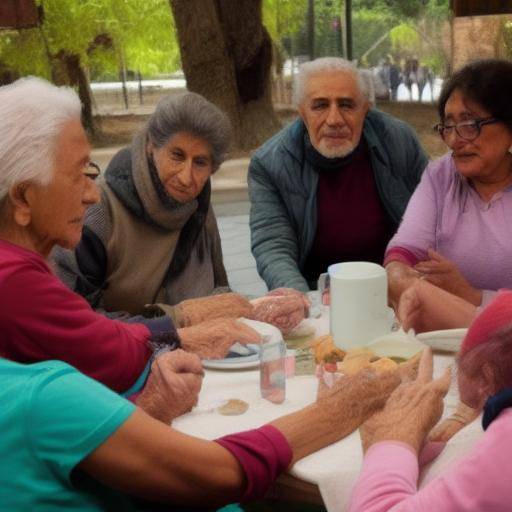
Family trust is the fundamental basis for the development of strong and harmonious relationships in the family nucleus. Fostering trust among its members strengthens emotional ties, promotes open communication and contributes to the emotional well-being of all members. In this article, we will explore exercises and dynamics that can improve family trust, providing practical advice and deep analysis to strengthen links within your home.
Introduction
Trust in the family is a crucial aspect of raising safe and balanced individuals. When family members trust each other, they feel confident in expressing their thoughts, emotions and needs. This creates an environment of mutual support, strengthening the resilience of the family in times of challenges. In this article, we will explore effective practical and dynamic exercises that promote family trust, allowing the development of strong and lasting ties.
History and Background
The importance of family trust goes back to the very roots of human society. From ancient civilizations to the present, family unity and cohesion have been considered as fundamental pillars for emotional and social well-being. Throughout history, different approaches have been developed to foster family trust, from cultural practices to psychological and therapeutic interventions.
The modern concept of family trust has evolved over time, influenced by sociocultural changes, advances in psychology and the growing importance of effective communication in the family nucleus. This development has led to the identification of various exercises and dynamics that seek to strengthen trust among family members.
Analysis in Deep
Trust in the family has the potential to generate numerous benefits, including greater family cohesion, more open communication and the creation of an emotionally safe environment for all members. However, the establishment and maintenance of family trust also presents challenges, such as conflict management, the construction of self-esteem and the overcoming of communication barriers.
In this context, it is crucial to identify and analyze the exercises and dynamics that can contribute to improving family trust. Focusing on these practices allows addressing the challenges that may arise, promoting constructive conflict resolution and strengthening affective ties at home.
Comprehensive review
Exploring the practical application of exercises to improve family trust is essential to understanding its effectiveness. Through case studies and best practices, it is possible to identify those strategies that have proven successful in different family contexts. By comparing different methods and approaches, the suitability of each exercise can be determined based on the unique needs and dynamics of each family.
Comparative analysis
By comparing family trust with other related concepts such as family cohesion and effective communication, the interrelationship between these elements can be seen. Identifying similarities, differences and possible synergies between these concepts allows a holistic approach to strengthen the relationship between family members. A holistic approach that incorporates related exercises and dynamics promotes a more complete and balanced development of family trust.
Practical Tips and Action Guide
Implementing effective exercises to improve family trust requires understanding and commitment on the part of all members. Providing practical advice and specific action guides allows families to effectively implement these strategies in their daily lives. By offering concrete steps and detailed explanations, it facilitates the integration of these exercises into family dynamics, thus promoting a positive change in interpersonal relationships.
Industry Perspectives and Expert Reviews
The perspectives of experts in family psychology, therapists and relationship counselors can provide valuable insights into the importance of family trust and how specific exercises and dynamics can positively impact family dynamics. In analyzing the views of experts and their recommendations, families can get a comprehensive insight into the effective implementation of these practices in their family environment.
Case Studies and Practical Applications
Case studies documenting the implementation of exercises to improve family trust provide concrete examples of their effectiveness in different scenarios. These practical applications allow families to understand how to adapt and customize these exercises according to their specific needs, offering a realistic view of long-term results.
Future Trends and Predictions
As family dynamics continue to evolve in response to sociocultural and technological changes, trends in the area of family trust are also constantly evolving. Advancing future trends in exercises and dynamics to strengthen family trust allows families to prepare for the challenges and opportunities that will arise, thus consolidating their unity in the future.
Conclusions
In conclusion, building and maintaining family trust is a continuous process that requires mutual attention, understanding and commitment. The exercises and dynamics presented in this article offer effective tools to strengthen family ties and create an emotionally safe environment. By consistently applying these approaches, families can cultivate stronger relationships, promoting an environment of love, respect and mutual support.
Frequently asked questions (FAQs)
**1. Why is family trust important?**Family trust is crucial because it fosters open communication, strengthens emotional support and promotes strong links among family members. This contributes to the emotional well-being and resilience of all members.
**2. What are some simple exercises to improve family trust?**Some simple exercises include sharing daily gratitude, setting moments for active listening among family members, and participating in activities that encourage collaboration and teamwork.
**3. How can exercises to improve family confidence help in conflict resolution?**Exercises that promote open communication and mutual understanding can reduce the intensity of family conflicts and foster a more constructive approach to resolving differences.
**4. Is it possible to apply these exercises in families with children and adolescents?**Yes, exercises to improve family confidence can be adapted to the age and stage of development of children and adolescents, promoting the active participation of all family members.
**5. How to foster family confidence in situations of separation or divorce?**In situations of separation or divorce, it is important to maintain open channels of communication, provide emotional support and promote an environment of mutual understanding and respect, which can contribute to the reconstruction of family trust.
**6. What is the role of family trust in the mental health of its members?**Family confidence significantly affects the mental health of its members, as it provides an emotionally safe environment that promotes self-esteem, resilience and emotional well-being.
With these exercises and dynamics, families can strengthen their links through mutual trust, promoting a harmonious and favourable environment for the integral development of their members.