At present, early education and the home learning environment have become more relevant, as parents seek to enrich their children's cognitive, emotional and social development from early ages. In this article, we will explore the importance of creating an effective home learning environment, how early education can positively impact and provide practical advice to achieve it.
History and Background
The concept of home learning environment has deep roots in the history of education. Since the first civilizations, parents have been the main educators of their children. Over time, there has been a growing recognition of the significant influence that the home learning environment has on child development.
Studies show that the period of early education is crucial for the integral development of children. During this period, children are especially receptive to new experiences and learning, which makes the environment in which they unfold has a significant impact on their cognitive, emotional and social development.
The desire to provide an enriching environment for children at home has evolved over time, influenced by advances in pedagogy, psychology and neuroscience.
Deep analysis
The creation of a home learning environment provides many benefits for the development of children. It provides an opportunity to stimulate curiosity, foster creativity, promote independence and strengthen the emotional bond between parents and children. However, it also poses challenges, such as the balance between play and formal learning, as well as the management of time and resources.
Current trends in early education have highlighted the importance of an environment of learning that fosters autonomous play, active exploration and guided discovery. In addition, the use of educational technology and the integration of interdisciplinary approaches have gained relevance in this context.
Comprehensive review
The application of an effective home learning environment can vary significantly according to the family preferences and needs of the child. Some families opt for more structured approaches, incorporating specific schedules and materials, while others prioritize flexibility and free play. It is important to consider the individualities of each child by creating a customized learning environment.
The impact of early education and the home learning environment is reflected in various studies and best practices. Multitud of experts agree on the importance of providing an environment in which children feel safe, accepted and motivated to explore, experience and learn.
Comparative analysis
It is essential to distinguish between the environment of home learning and formal education. While both share the goal of promoting learning, the first focuses on the family environment, the relationship of parents to children and the integration of daily experiences in learning activities. Early education, for its part, encompasses more structured, pedagogical and formal learning.
Despite these differences, the home learning environment and early education share the fundamental premise of fostering comprehensive development in children, cultivating social, emotional and cognitive skills from an early age and laying the foundation for lifelong learning.
Practical Tips and Recommendations
Here are some practical recommendations for creating an effective home learning environment:
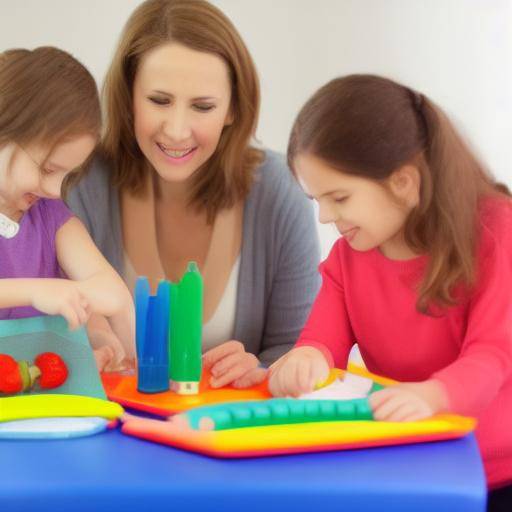
- It promotes curiosity and enriching game.
- It provides diverse materials for exploration.
- Integrates learning into everyday activities.
- Establish flexible routines that promote autonomy.
- It provides a safe and emotionally favorable environment.
- Find learning opportunities through family interaction.
Remember that every child is unique and requires an approach adapted to their individual needs. Through constant observation and communication, parents can adjust the learning environment to align with their children's interests and skills.
Industry Perspectives and Expert Reviews
The perspectives of the educational community and experts highlight the importance of an active commitment of parents in the learning process of their children. The benefits of a solid home learning environment, which promotes self-exploration and critical thinking, have lasting implications for the development of problem solving skills, creativity and mental flexibility.
Recognized specialists in the area of early education also emphasize the need to balance cognitive stimulation and affectivity, fostering an environment full of love, support and opportunities for the integral growth of children.
Case Studies and Practical Applications
To better understand the implementation of a home learning environment, consider the case of the López family. Through the introduction of significant learning activities in the daily routine, such as shared reading, exploration of nature and experimentation with artistic materials, parents have significantly contributed to the intellectual and emotional development of their children.
In addition, in the school environment, early education programmes have been implemented that encourage collaboration between the educational institution and families to extend learning beyond classrooms, providing resources and guidance to parents to enrich the home learning environment.
Future Trends and Predictions
As development technology and psychology continue to advance, new tools and approaches are expected to emerge to improve the home learning environment. The integration of artificial intelligence, increased reality and adaptive technology will provide innovative opportunities to customize the learning experience of each child.
In addition, there is a growing recognition of the importance of the first years of life in the development of the brain and socio-emotional skills, leading to increased investment in early education and support for families in the creation of enriching learning environments.
Conclusion
In short, the home learning environment is a vital component in promoting the comprehensive development of children, significantly complementing early education. Recognizing the potential of each household as an educational space, parents can play a key role in fostering love for learning, creativity and discovery in their children.
Frequently asked questions
1. What is the role of parents in the home learning environment?
Parents play a crucial role in providing an enriching environment that fosters the cognitive, emotional and social development of their children. Their ability to stimulate curiosity, promote enriching play and promote autonomy contributes significantly to early learning of children.
2. How can I integrate learning into everyday activities at home?
Learning can be integrated into everyday activities by reading stories, exploring nature, culinary experimentation, and solving practical problems. It is important to be attentive to the learning opportunities that arise in the family environment and to promote curiosity and discovery.
3. What are the long-term benefits of a solid home learning environment?
A solid home learning environment can contribute to the development of critical thinking skills, problem solving, creativity and autonomy in children, laying the foundations for lifelong learning and integral growth.
4. What is the difference between home learning environment and formal education?
The home learning environment focuses on family interaction, enriching play and integrating daily experiences into learning activities, while formal education encompasses more structured, pedagogical and formal learning, usually in a school environment.
5. How can I adapt the home learning environment to the individual needs of my children?
Attentive observation and open communication with children are essential to adapt the home learning environment to the individual needs of children. Recognizing their interests, strengths and areas of development, and adjusting activities and materials accordingly, is essential to promoting meaningful learning.
6. What are future trends in early education and the home learning environment?
Future trends in early education and the home learning environment are expected to focus on the integration of educational technology, the personalization of learning, and greater recognition of the first years of life as a critical period for the cognitive and emotional development of children.
In conclusion, creating an effective home learning environment requires an active commitment of parents to provide an enriching environment that promotes the curiosity, creative play and integral development of children. By understanding the importance of this environment in the context of early education, parents can significantly contribute to the growth and learning of their children, laying the foundation for a bright future.