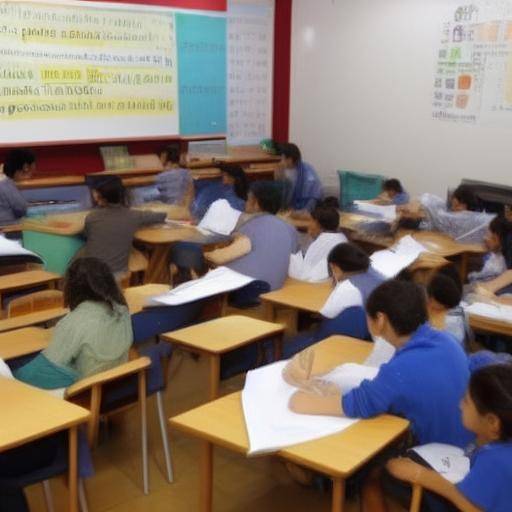
Conflict resolution is a crucial skill that all individuals, especially students, need to develop for harmonious and productive coexistence. In a school environment, effective conflict management not only promotes a positive environment, but also lays the foundation for valuable interpersonal skills in adult life. In this article, we will explore effective resources to teach conflict resolution in school teams, addressing their importance, educational strategies and their practical application in an educational environment.
History and Background
Conflict resolution has profound historical roots dating back to ancient civilizations. Throughout history, different theories and approaches have been developed to effectively understand and manage conflicts. From the initial concepts of mediation and negotiation to the modern tools of conflict resolution, there has been a significant evolution in this field.
Detailed Analysis
Conflict resolution in school environments not only fosters healthy relationships among students, but also contributes to the development of informed communication, empathy and decision-making skills. Studies show that conflict resolution skills acquired at school have a positive impact on adult life, improving personal and professional relationships.
Comprehensive review
Conflict resolution teaching methods include the use of role games, group discussions, and empathy exercises for students to learn to understand the views of others. Educators can integrate these methods into the school curriculum to teach students how to deal with conflicts constructively and peacefully.
Comparative analysis
It is important to compare the resources available to teach conflict resolution in school teams. From specific educational programmes to the integration of conflict resolution into the school curriculum, there are various ways to address this crucial issue. We will analyze the similarities and differences in these strategies to identify best practices.
Practical Tips and Accessible Tips
For school educators and leaders, it is essential to understand how to implement effective conflict resolution strategies in school settings. We will offer practical advice and specific actions that education professionals can employ to teach students how to handle conflicts constructively, fostering a positive learning environment.
Industry Perspectives and Expert Reviews
Collection of expert perceptions in the field of conflict resolution in school settings. We will analyze the implications for the future, including interviews with educational experts and leaders in the development of social and emotional skills in educational settings.
Case Studies and Practical Applications
To broaden our understanding of the use of resources to teach conflict resolution in school teams, we will examine real case studies that demonstrate the effectiveness of various educational strategies. These actual cases will provide concrete examples of how resources are applied to foster a positive and productive school environment.
Future Trends and Predictions
Finally, we will address emerging trends that are shaping conflict resolution teaching in school settings. Based on current data and expert opinions, we will provide predictions on how the educational approach will evolve in conflict resolution in the future, as well as the challenges and opportunities it will face.
Conclusion and Frequently Asked Questions (FAQs)
In short, conflict resolution in school teams is a fundamental aspect of the socio-emotional development of students and lays the foundation for their success in life. With effective strategies and adequate resources, educators can teach students how to address conflicts in a constructive manner, promoting a positive school environment.
Frequently asked questions (FAQs)
1. What is the importance of teaching conflict resolution in school teams?
Teaching conflict resolution in school teams is crucial, as it promotes social, emotional and communication skills in students. In addition, it prepares young people to face challenges in real life constructively.
2. What resources can be used to teach conflict resolution?
There are various tools and techniques, such as role games, structured debates, peer mediation, and social skills programs, which can be used to teach students to resolve conflicts effectively.
3. How can educators integrate the teaching of conflict resolution into the school curriculum?
Educators can incorporate the teaching of conflict resolution into the school curriculum by including activities, exercises and projects that foster collaboration, empathy and open dialogue among students.
4. What are the long-term benefits of teaching conflict resolution in school settings?
Teaching conflict resolution in school environments can have long-term benefits, including reducing violence, strengthening communication skills and fostering healthy relationships in adult life.
5. What role do parents play in teaching conflict resolution?
Parents can support the teaching of conflict resolution by fostering open communication at home, modeling positive behaviors in conflicting situations and promoting empathy and understanding in their children.
6. What are the effective strategies to address conflicts in school settings?
The use of active listening, the identification of mutual needs, the search for collaborative solutions and the promotion of empathy are effective strategies to address conflicts in school settings.
In conclusion, the teaching of conflict resolution in school teams is essential for the comprehensive development of students. With the use of adequate resources and effective strategies, a school environment can be fostered where communication, understanding and peaceful coexistence are primary values, laying the foundation for a harmonious and collaborative future society.