Introduction
Initial education is the basis on which the foundations of respect are built in society. In this article, we will explore the importance of instilling the value of respect from early ages, as well as the resources and strategies that can be implemented to achieve it. From the current history and context to future trends and expert views, this article provides a comprehensive insight into how to promote respect in initial education.
History and background
The concept of respect has been fundamental in all cultures throughout history. From the philosophical teachings of ancient Greece to the ethical principles of various religions and philosophies of the world, respect has been a pillar in the formation of harmonious societies.
One of the most important milestones in promoting respect for early education was the 1959 Declaration of the Rights of the Child, which recognized the importance of children ' s rights to health, education and protection. This declaration laid the foundation for the incorporation of respect and dignity in initial education worldwide.
Detailed analysis
Promoting respect in initial education entails significant benefits for the integral development of children. Studies have shown that children who learn to respect their peers and school environment tend to have healthier interpersonal relationships and develop greater empathy. However, there are also challenges, such as the influence of social environments that do not promote respect.
Current trends in initial education emphasize the implementation of educational programmes that integrate respect as a fundamental principle. The inclusion of activities that promote empathy, conflict resolution and the recognition of cultural diversity are effective strategies to inculcate respect.
Comprehensive review
Within the resources to promote respect in initial education, programmes for the teaching of values, the use of child literature that promotes respect and inclusion, as well as the training of educational staff in strategies to effectively inculcate respect. The implementation of a comprehensive curriculum that integrates respect as a cross-cutting value is fundamental to its success.
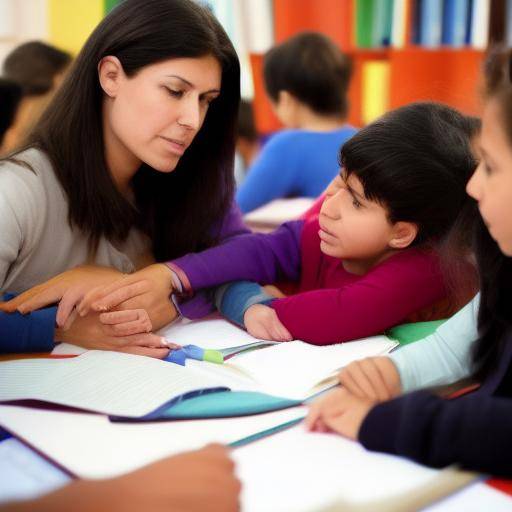
Education experts agree that respect should not only be imparted theoretically, but should be practiced day by day. Therefore, strategies such as open dialogue, peaceful conflict resolution and modelling of respectful behaviour by educators are crucial.
Comparative analysis
The incorporation of resources to inculcate respect in initial education is similar to the promotion of other fundamental values, such as equality, honesty and solidarity. It is therefore important to address these issues jointly in order to promote comprehensive education in values.
Practical advice and recommendations
- Promote diversity: Actively introduce cultural and socio-economic differences.
- Establish clear rules: Create rules of coexistence that promote mutual respect.
- Employ the game as a teaching tool: Use group games that encourage collaboration and respect.
Industry perceptions and expert opinions
According to María Pérez, an initial education expert, "Respect is fundamental in the formation of responsible and empathic citizens. Initial education is the ideal stage to sow seeds of respect for children."
Case studies and real practical applications
A successful example of applying resources to inculcate respect in initial education is the "Learning with Respect" programme developed by the Education for All Foundation. This program integrates educational activities and materials that encourage respect for oneself and others.
Future trends and predictions
As society evolves, the focus on respect in initial education is expected to remain relevant. The incorporation of educational technologies, such as interactive applications that promote empathy and conflict resolution, will be a growing trend. In addition, there is a greater emphasis on continuing education staff training in effective strategies to inculcate respect.
Conclusion
Instilling respect in initial education is a fundamental pillar for the formation of full and respectful individuals in society. The available resources, effective strategies and collective commitment of educators, parents and community at large are key to the development of a generation based on mutual respect.
From educational programs to daily practices, promoting respect lays the foundation for harmonious coexistence and a more cohesive society.
Frequently asked questions
Why is it important to instill respect in initial education?
Promoting respect from early ages lays the foundation for healthy and constructive relationships in adult life. In addition, it promotes empathy, understanding and inclusion in society.
How can values of respect be integrated into initial education?
Respect values can be integrated through activities, games, readings, practical examples and explicit teaching of respectful behaviors.
What is the role of parents in in inculcating respect in initial education?
Parents play a crucial role in modeling respectful behaviors at home and in supporting the teachings of respect given at school.
What is the long-term impact of inculcating respect in initial education?
The inculcation of respect in initial education contributes to the formation of individuals with solid values, able to interact positively in society and to confront the challenges with empathy.
What resources can be used to inculcate respect in initial education?
The most effective resources include children ' s books and stories that promote respect and diversity, interactive educational materials and training of educational staff in effective strategies.
How can we assess the impact of efforts to inculcate respect in initial education?
The impact can be evaluated through direct observations, surveys of parents and educators, as well as analysis of behaviors and relationships among children.
External references
For more information on the inculcation of respect in initial education, we invite you to visit the following links:
- UNESCO: Education for Global Citizenship
- Emotional and Value Education: Tools for Educators
- Education for All: “Learning with Respect” Program
With the implementation of effective resources and collective commitment, the inculcation of respect in initial education not only impacts on the individual development of children, but also lays the foundation for a more equitable and respectful society in the future.