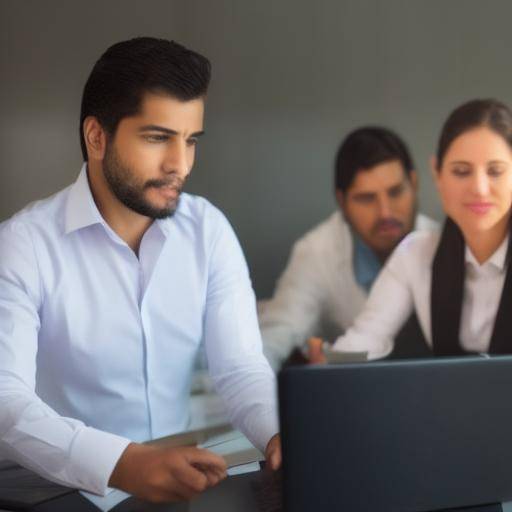
Teamwork is a crucial skill in the current world of work and has a significant impact on the development of social skills. Understanding this impact is essential to stand out in collaborative work environments and develop key interpersonal skills. In this article, we will explore in depth the impact of teamwork on the development of social competencies, from their history and evolution to future trends and practical tips to maximize their potential. We will also address frequent questions on this subject, providing detailed and insightful answers.
Introduction
Teamwork is a concept that goes beyond simply collaborating with others in a working environment. It involves the coordination of efforts, the combination of individual skills and the synchronization of common goals to achieve effective results. With the advent of more collaborative working environments and the growing global interconnection, teamwork has become a fundamental pillar for organizational success.
In this context, the development of social competencies, such as effective communication, empathy, conflict resolution and the ability to work in harmony with different personalities, becomes crucial. The impact of teamwork on improving these competencies is undeniable, and its deep understanding is essential for professionals seeking to stand out in dynamic and diverse working environments.
History and Background
The concept of teamwork has its roots in the history of humanity, from ancient hunting-collective societies to complex modern organizations. The notion that collaboration and synergy between individuals can achieve results that exceed individual capacities has been fundamental in the evolution of society and the economy.
The first demonstrations of teamwork date back to prehistoric communities, where joint hunting and equitable distribution of resources permeated social dynamics. With the emergence of civilizations, the realization of massive construction projects, such as Egyptian pyramids, evidences teamwork as a critical component of human progress.
The advent of the Industrial Revolution marked a significant milestone in the history of teamwork. The factories and assembly lines required unprecedented coordination among the workers, laying the foundation for modern understanding of teamwork in organizational environments.
Deep analysis
The impact of teamwork on the development of social skills is manifested through a series of tangible and intangible benefits. The ability to collaborate effectively, communicate clearly and emphatically, and resolve conflicts constructively, are the result of significant experiences in teamwork.
The development of social competencies through teamwork also faces challenges, such as cultural differences, interpersonal conflicts and the effective management of the diversity of skills and perspectives. Addressing these challenges is essential to optimize the positive impact of teamwork on the development of social competencies.
Comprehensive review
Explore teamwork applications in diverse environments and their impact on the development of social competencies provides a holistic view of their relevance. Through case studies and best practices, it is possible to understand how teamwork can enhance team cohesion, foster collective creativity and strengthen interpersonal relationships.
Field experts have pointed to the need to adapt to changes in modern working environments, which has a direct impact on social competencies. The agility to work on virtual teams, the management of cultural diversity and the resolution of conflicts in multicultural environments are skills that have gained relevance in the current working scenario.
Comparative analysis
Compare the impact of teamwork on the development of social competencies with other professional development approaches allows to identify similarities, differences and opportunities for synergy. By contrasting the impact of individual social skills development strategies with the team-based approach, you can see how active collaboration can significantly enhance personal and professional growth.
Practical Tips and Accessible Advice
Successful implementation of teamwork for the development of social competencies requires a clear understanding of effective best practices and strategies. Some practical councils include fostering open and honest communication, cultivating an environment of trust and mutual respect, and providing opportunities for joint resolution of problems.
Perceptions of Industry and Expert Reviews
The perceptions of human resources experts, organizational psychology and leadership provide an invaluable insight into the importance of teamwork in the development of social skills. Emerging trends in talent management and leadership highlight the need for sound social skills as a central requirement in dynamic and changing working environments.
Case Studies and Practical Applications
Detailed case studies reveal how organizations and teams have effectively implemented teamwork strategies to promote the development of social skills. These cases provide a tangible insight into how teamwork can become a powerful tool for personal and business growth.
Future Trends and Predictions
The future of teamwork and its relationship with the development of social competencies is influenced by trends such as digitalization, globalization and movements towards more flexible working environments. Predictions suggest a continuous emphasis on sound interpersonal skills, the promotion of diversity and inclusion, and the optimization of technological tools to facilitate effective collaboration.
Conclusions
The impact of teamwork on the development of social competencies is undeniable, and its understanding is crucial to excel in increasingly collaborative and diverse working environments. By maximizing opportunities for collaboration, fostering personal and professional growth, and actively embracing the complexities of human interactions, we pave the way for success in the modern era of work.
Frequently asked questions
1. How does teamwork impact effective communication?
Teamwork provides opportunities to practice communication skills, such as listening actively, expressing ideas clearly, and adapting the message to the audience. Through collaboration, effective communication skills are strengthened and new perspectives are acquired on their importance in working environments.
2. Can teamwork help develop conflict resolution skills?
Yes, teamwork often involves managing interpersonal conflicts and negotiating mutually beneficial solutions. These experiences strengthen the capacity to resolve conflicts constructively and foster the development of mediation skills.
3. What are the common challenges associated with the development of social skills through teamwork?
Some challenges include the management of cultural diversity, the harmonization of different working styles and the resolution of intra- and inter-group conflicts. Overcoming these challenges is critical to maximizing the positive impact of teamwork on the development of social competencies.
4. What is the role of diversity in the impact of teamwork on the development of social competencies?
Diversity in work teams enriches social interactions, fosters intercultural understanding and promotes the development of empathy skills. Effective diversity management enhances the positive impact of teamwork on the development of social competencies.
5. How can professionals take advantage of teamwork for the development of social skills?
Professionals can maximize the impact of teamwork on the development of social skills by actively seeking opportunities for collaboration, participating in team building activities, leading by example and cultivating strong interpersonal relationships based on mutual respect and trust.
6. What are future trends in the impact of teamwork on the development of social skills?
Future trends are expected to focus on integrating teamwork into virtual environments, effective management of remote equipment and the promotion of organizational cultures that value diversity and inclusion. Furthermore, the strategic use of collaborative technologies and adaptation to flexible working environments will be key aspects in the development of social skills through teamwork.
In conclusion, teamwork not only promotes the achievement of organizational goals, but also plays a key role in the development of social competencies. Its impact extends to improved communication, conflict resolution, and the promotion of diversity and inclusion. By fully understanding and harnessing the power of teamwork for the development of social competencies, professionals can prepare themselves to stand out in the working environments of the future.
With a deeper understanding of the impact of teamwork on the development of social skills and an active willingness to apply these perspectives in real-world situations, professionals can make the most of this powerful dynamic for their personal and professional growth.
This article provides an integral view of the impact of teamwork on the development of social competencies, from its historical foundations to future trends. In addressing frequent questions related to this issue, a detailed guide is offered to understand and capitalize on the transformative power of teamwork in the development of social competencies.