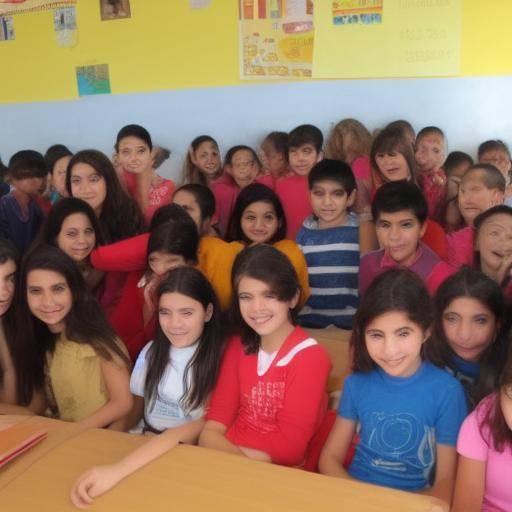
Mutual respect is a fundamental pillar in school coexistence. Promoting respect among students and teaching staff not only promotes a harmonious environment, but also has significant benefits in the academic, emotional and social development of all involved. In this article, we will explore in depth the benefits of mutual respect in school coexistence, its importance, the challenges it faces and how it can be effectively promoted.
Introduction
The concept of mutual respect in school coexistence goes beyond simply tolerating differences. It implies recognizing and assessing each individual, promoting an environment of acceptance, tolerance and consideration. This approach is not only vital to the emotional well-being of students, but also crucial to the development of social skills and academic performance.
In this article, we will explore in detail the benefits of mutual respect in school coexistence, addressing its impact on academic performance, emotional health, the prevention of school harassment, and the construction of more inclusive and equitable educational communities.
History and Background
Mutual respect for school coexistence is not a new concept, but its importance has gained relevance over time. From ancient civilizations to today, mutual respect has been a fundamental value in society. In the educational context, its implementation has evolved as awareness of diversity, equity and inclusion has grown.
We will explore how the concept of mutual respect in school coexistence has evolved throughout history, highlighting important milestones, key figures that have advocated for their implementation, and how it has been incorporated into the normative framework of education.
Detailed Analysis
Mutual respect for school coexistence entails a number of tangible and intangible benefits. From fostering a positive learning environment to promoting conflict resolution skills, the positive impact of mutual respect is undeniable. We will discuss statistics, case studies, actual examples, and expert opinions that support these benefits.
In addition, we will examine the challenges that may arise in fostering mutual respect for school coexistence, such as resistance to change, lack of resources, and cultural barriers. We will identify effective strategies to overcome these obstacles and promote a school culture based on mutual respect.
Comprehensive review
Mutual respect in school coexistence goes beyond the classroom. We will explore its application in non-formal environments, such as extracurricular activities, as well as the interaction between school, families and the community. Through case studies and best practices, we will discuss how to promote mutual respect in a comprehensive manner in the school context.
In addition, we will present expert views on the future of mutual respect for school coexistence, highlighting emerging trends and offering informed predictions based on current data and projections of educational experts.
Comparative analysis
We will compare the concept of mutual respect in school coexistence with alternative approaches to managing school dynamics, highlighting their differences, similarities and the impact on student formation. Through concrete scenarios and examples, we will illustrate how mutual respect enriches the educational experience and contributes to the construction of a more just and equitable society.
Practical Tips and Actions
We will provide practical advice to promote mutual respect in school coexistence, from the implementation of emotional education programmes to effective strategies to manage conflicts in the school environment. These tips will be backed by evidence empirical and successful experiences, offering school educators and administrators a clear framework to promote mutual respect effectively.
Conclusions and FAQs
Conclusion
Mutual respect for school coexistence is an essential component for the integral development of students. Their benefits go beyond the classroom, positively impacting on society as a whole. In this article, we have explored its importance, benefits, challenges and strategies for its promotion. By fostering an environment of mutual respect, schools not only create safer and healthy environments, but also contribute to the formation of full and compassionate citizens.
Frequently asked questions
Why is it important to promote mutual respect in school coexistence?
Mutual respect promotes a positive learning environment, prevents school harassment and contributes to the development of life-saving social skills.
How can teachers promote mutual respect in the classroom?
Teachers can promote mutual respect in the classroom by fostering empathy, teaching skills for conflict resolution and modeling respectful behaviors.
What impact does mutual respect have on students' academic performance?
Mutual respect in school coexistence is associated with improved academic performance, as it creates an enabling environment for learning and comprehensive student development.
What are the common challenges in fostering mutual respect for school coexistence?
Some common challenges include resistance to change, lack of resources and cultural barriers that can hinder the promotion of an environment based on mutual respect.
How can mutual respect in school coexistence contribute to the formation of responsible citizens?
In promoting mutual respect, schools contribute to the formation of responsible, compassionate citizens and strong social ethics, which are fundamental to the development of an equitable and just society.
What effective strategies can be implemented to promote mutual respect in school coexistence?
Effective strategies include emotional education programmes, mentoring among students, conflict resolution practices and promoting open and respectful dialogue in the school environment.
External Sources
- UNESCO: School survival
- Education3.0: Mutual respect for school coexistence
- National Institute for the Evaluation of Education: School survival
It recalls that promoting mutual respect for school coexistence is crucial for the integral development of students and for the creation of more inclusive and equitable societies. In promoting mutual respect, schools not only cultivate an enabling environment of learning, but also prepare students to be responsible and compassionate citizens in the future.